Showing posts with label Western Medicine. Show all posts

Thursday, February 1, 2024

Led by traditional Chinese medicine, referring to Western medicine, and emphasizing clinical efficacy


On the basis of inheriting and carrying forward the basic theory of traditional Chinese kidney disease, the theoretical system of traditional Chinese kidney disease extensively absorbs the advanced achievements of modern medicine, continuously innovates and develops, making it more scientific and increasingly practical in clinical practice, better serving the clinical needs of patients.

(1) Basic theoretical research

By utilizing modern medical research methods to strengthen the theoretical research of traditional Chinese kidney disease, such as establishing kidney disease models to study the essence of traditional Chinese kidney disease, fruitful results have been achieved. This has enabled the theoretical integration of traditional Chinese and Western kidney disease, expanding the space for the basic theory of traditional Chinese kidney disease, and providing modern medical basis for the basic theory of traditional Chinese kidney disease, And it is of great significance for future development and guiding clinical practice.

(2) Clinical practice

The combination of traditional Chinese and Western medicine for kidney disease is more diverse in methods and content. The main methods include the combination of traditional Chinese and Western medicine based on Western medicine, the combination of traditional Chinese and Western medicine based on traditional Chinese medicine syndromes, and the combination of traditional Chinese and Western medicine in treatment, fully demonstrating the broad development prospects of the theoretical system of traditional Chinese kidney disease in guiding clinical practice.

Thursday, January 25, 2024

Combination of TCM and Western Medicine for Kidney Disease


In terms of treatment, clinical research on the combination of traditional Chinese and Western medicine in the treatment of kidney diseases has made significant progress and achieved satisfactory therapeutic effects. With the increasingly systematic and in-depth understanding of kidney disease in modern medicine, the majority of traditional Chinese medicine and the combination of Chinese and Western medicine kidney disease workers have absorbed advanced treatment methods of modern medicine for kidney disease, and applied the traditional Chinese medicine theory of syndrome differentiation and treatment methods. At the same time, combined with the pharmacology and pharmacodynamics of traditional Chinese medicine, they have used prescriptions to treat kidney disease and achieved very satisfactory therapeutic effects. For some renowned traditional Chinese medicine practitioners who have developed specialized formulas for treating kidney disease, or have proven effective formulas and single herbs through clinical practice, such as rhubarb, Tripterygium wilfordii, Cordyceps sinensis, etc., modern medical research methods are used to confirm and serve the vast number of kidney disease patients.

Monday, January 22, 2024

Treatment Principles of Traditional Chinese Medicine and Western Medicine for Kidney Disease

From the perspective of treatment principles, traditional Chinese medicine adopts methods such as protecting the kidneys, tonifying the kidneys, warming the kidneys, diuresis, dispelling dampness, detoxification, etc., while Western medicine adopts methods such as protecting kidney function, protecting residual renal units, anti-infection, diuresis, and reducing swelling. The two treatment approaches and principles share the same goal.

In summary, traditional Chinese medicine and Western medicine are essentially consistent in their understanding of the kidney's regulation of water and the normal metabolism of fluids. Traditional Chinese medicine emphasizes holistic observation, dialectical thinking, and clinical practice research, providing a systematic basis for understanding the physiological and pathological laws of kidney regulating water. Modern Chinese medicine has made some progress in the substantive research of kidney regulating water. The thinking of Western medicine is based on practical research, utilizing modern science and technology to objectively and microscopically understand the kidney, and developing to understand the kidney at the cellular and molecular levels. This article discusses the physiological function, pathological manifestations, and treatment principles of the kidney from different perspectives and methods, enriching the understanding of the pathological physiology of the kidney and improving the clinical level of kidney disease treatment.

Saturday, January 20, 2024

Treatment Principles of Western Medicine for Kidney Associated Disease


The treatment principles of Western medicine for kidney, ureter, bladder, and prostate diseases caused by various reasons include protecting kidney function, maintaining water electrolyte balance and acid-base balance, anti-infection, diuresis and swelling reduction, and dilating vascular smooth muscle. For patients with complete anuria, hemodialysis, peritoneal dialysis, and kidney transplant have been used to maintain the relative balance of fluid metabolism, saving many patients.

Thursday, January 18, 2024

The etiology, pathogenesis, and clinical manifestations of renal damage

The abnormal metabolism of kidney fluid in Western medicine ultimately leads to kidney damage, which can be caused by two types of causes: primary kidney disease and secondary kidney disease. Primary damage caused by various infections, poisoning, tumors, deformities, hypertension, diabetes and immune disorders, urinary tract stone obstruction, and drug damage to the kidneys, ureters, bladder, prostate, and other parts is the most common cause of kidney damage. Clinical pathology shows glomerular membranous hyperplasia or fibrosis, manifested as crises such as polyuria, oliguria, nocturia, incomplete urination, frequent urination, urgency, painful urination, anuria, edema, heart failure, pleural and ascites. Laboratory examination showed hematuria, proteinuria, tubular urine, elevated level of blood urea nitrogen, non-protein nitrogen, and creatinine, decreased creatinine clearance rate, obstructed or low-level straight lines on the renal , and shrunk or enlarged renal image on both kidneys on ultrasound. Renal damage with clear etiology through routine examination is likely to lead to water sodium retention, acidosis, hyperkalemia and other serious electrolyte disorders. If not properly treated, the condition will worsen. This also fully demonstrates that the kidney plays a dominant role in water metabolism, and the organ damage affected by kidney damage is severe, with prominent manifestations being abnormal water metabolism.

Both the etiology of traditional Chinese and Western medicine emphasizes internal factors. Renal damage caused by external factors has different clinical manifestations and pathological mechanisms. Although the explanations are different, they all emphasize that renal damage is the main cause, and urinary incontinence, edema, and other factors are mostly related to the kidneys.

Tuesday, January 16, 2024

From the Perspective of Western Medicine, to See Kidney Function

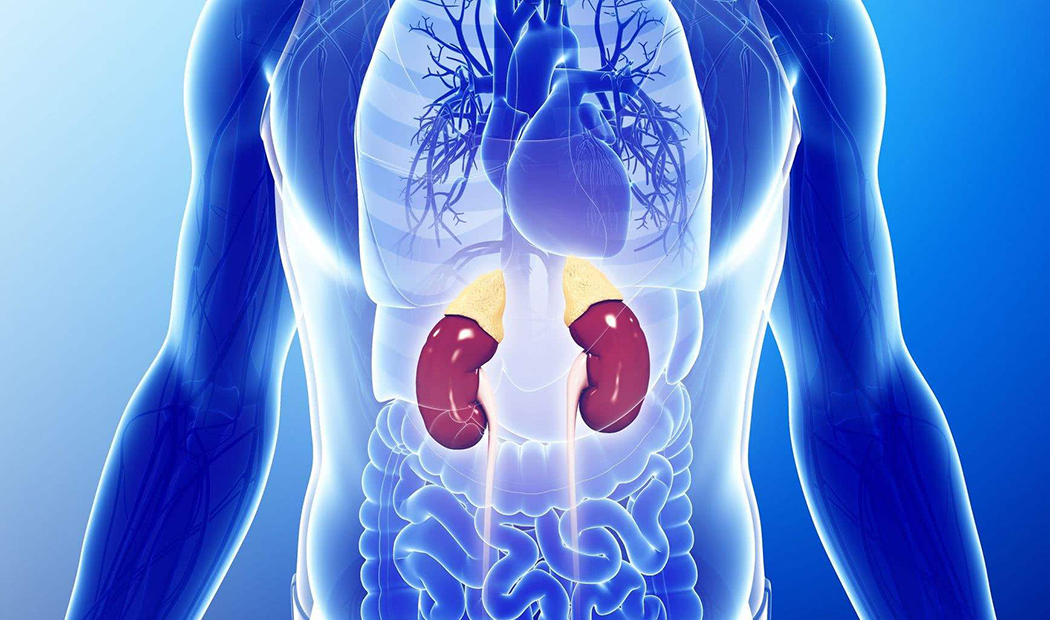
The kidney referred to in Western medicine is the urinary organ in the human body, which has the functions of generating urine, excreting metabolic products, and automatically concentrating and diluting urine according to the human body's water demand so as to increase or decrease urine excretion. This mainly relies on the filtration and secretion of water by the glomerulus, and 99% of the water is reabsorbed by the renal tubules, ultimately excreting 1% of the water, thereby maintaining the dynamic balance of water electrolytes and acid-base ions, excreting toxins and drugs in the body, and playing a role in purifying the internal environment. In addition, the renin angiotensin aldosterone system has various bioactive effects, among which aldosterone has a sodium retention and potassium excretion effect, which has a significant impact on water sodium metabolism and can regulate water liquid balance.

From the above, it can be seen that in traditional Chinese medicine, the kidney governs water through the gasification and transpiration of kidney Yang, with warm and transformation, playing a leading role in water metabolism in the lungs, spleen, triple jiao, bladder, and small intestine. While in Western medicine, renal function is mainly reflected in the excretion of toxins in urine, regulation of water and electrolytes, maintenance of acid-base balance, and the spherical tube system that regulates water and liquid balance, which is the most important organ for human water metabolism. It is not difficult to see that the summary of the theory of kidney governing water contains the function of Western medicine in participating in water metabolism.

Massaging the Yongquan acupoint is beneficial for the kidneys

Massaging the Yongquan acupoint is beneficial for the kidneys. The following are the methods for massaging the Yongquan acupoint: Rubbing...